AI Agent Development
Build AI agents for smarter business workflows
AI agent development by AVR Web Consulting: design AI-powered agents that assist with business tasks, information processing and connected workflows, with human oversight.
Quick answer
An AI agent is a software system that interprets a task, uses the tools or information available to it, makes decisions inside defined boundaries and carries out actions according to its configuration. AVR Web Consulting builds focused agents for defined business processes, with access controls, logging and human oversight where decisions matter.
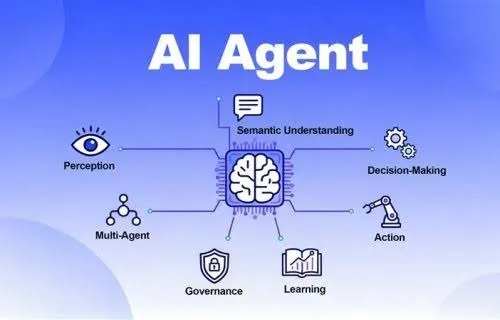
- Scope
- Defined tasks
- Connects to
- Tools & workflows
- Controls
- Permissions & logging
- Oversight
- Human in the loop
Key Takeaways
- Expert strategies tailored for AI Agent Development Services
- Data-driven approach without relying on guesswork
- Focus on sustainable, long-term search visibility
- Fully aligned with modern Answer Engine and AI search requirements
What is an AI agent?
An AI agent is a software system designed to interpret a task, use available tools or information, make decisions within defined boundaries and execute actions according to its configuration. In practice that means it can read a request, look up what it needs, choose from a limited set of permitted actions and report back.
The useful ones are narrow. An agent with a clear job, a clear set of tools and clear limits is far more dependable than one asked to handle anything.
What we can build
- Customer support assistants that answer from your own approved content
- Lead qualification agents that ask defined questions and route enquiries
- Internal knowledge assistants for policies, documentation and process questions
- Data-processing agents that summarise, classify or extract structured information
- Workflow agents that trigger and follow up on connected processes
- Research assistants that gather and organise information for review
- Business task assistants for repetitive, well-defined internal requests
- AI-powered workflow systems that combine an agent with automation steps
How an AI agent works
- 1User / triggerA person asks something, or an event in a connected system starts the agent.
- 2Understand taskThe agent interprets the request against its instructions and boundaries.
- 3Retrieve informationIt looks up the documents, records or data it has been given access to.
- 4Use toolsIt calls the specific tools or APIs it is permitted to use.
- 5Perform actionIt carries out the allowed action, or requests human approval when required.
- 6Return resultIt returns an answer or outcome, and the interaction is logged.
AI agents with automation
Agents and workflow automation solve different halves of the same problem. The agent handles interpretation and decision-making; the automation platform reliably carries out the steps. Conceptually the pattern looks like this:
- User request arrives through a form, chat or connected application
- The AI agent interprets the request and gathers what it needs
- A decision is made within the boundaries the agent has been given
- An n8n workflow executes the resulting steps
- External applications are updated through their APIs
- The result is returned to the user and recorded
Designed per use case
This is a conceptual pattern. The actual design depends on your tools, data and how much autonomy is appropriate.
Benefits
- Automate repetitive tasks that still need some interpretation
- Assist employees by handling first-line questions and lookups
- Process information such as long documents, forms or enquiry text
- Connect business workflows that currently require manual coordination
- Improve operational efficiency on high-volume, low-complexity requests
- Create digital assistants scoped to your own content and systems
Limitations you should know about
AI agents are not autonomous and they are not error-free. We would rather set expectations correctly than sell an idea that fails in production.
- They can make incorrect decisions, particularly on unusual inputs
- They can misunderstand instructions that are ambiguous or incomplete
- They can produce incorrect information stated confidently
- They require monitoring of what they answer and what they do
- They require access controls, so an agent can only touch what it should
- They require testing against real cases before being trusted
- They require human oversight for decisions that carry cost or risk
Security and reliability
- Access control and least-privilege permissions for every tool an agent can use
- Authentication for the interfaces through which the agent is reached
- Data protection rules covering what the agent may read, store and send
- Logging of requests, decisions and actions for review
- Monitoring so unexpected behaviour is noticed early
- Error handling and safe fallbacks when a step fails
- Human approval steps before actions that are costly or hard to reverse
Frequently asked questions
Get an AI visibility & SEO audit
Tell us your target keywords and markets. We reply within one business day with findings, priorities and a tailored proposal.