AI SEO · 1 October 2026 · 25 min read
n8n Automation & AI Agents for Digital Marketing and SEO
Comprehensive guide to n8n automations, AI agents, agentic workflows, and how they support digital marketing and SEO tasks efficiently and securely.
Quick answer
Traditional automation uses fixed rules, while AI agents use LLMs to dynamically select tools and plan steps to achieve goals. In marketing and SEO, agents help analyze data, generate briefs, and monitor changes, though human approval remains crucial.
Introduction: The Shift to Agentic Workflows
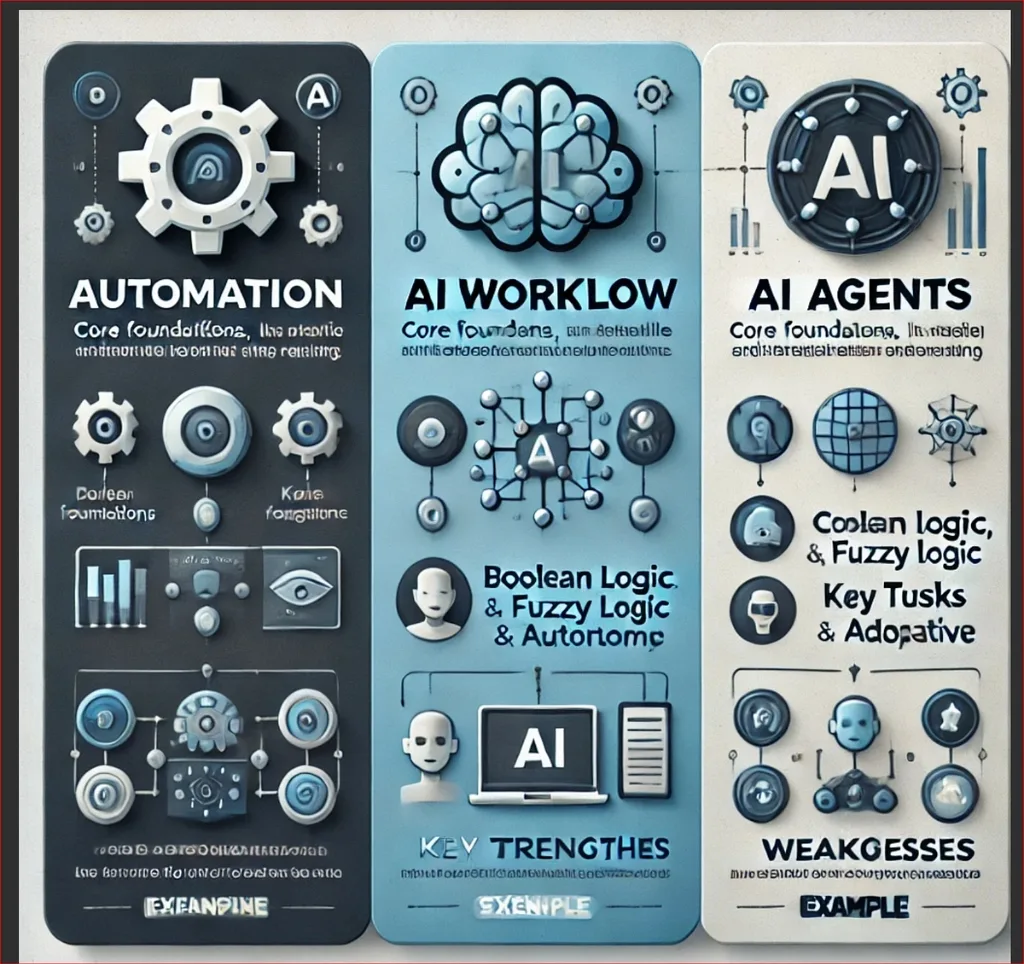
The landscape of digital marketing and search engine optimization has undergone a profound transformation. We are no longer just automating simple, repetitive tasks; we are deploying autonomous systems capable of reasoning, planning, and executing complex, multi-step operations. This evolution from traditional automation to AI-driven agentic workflows is reshaping how businesses manage their online presence.
Traditional automation relies on fixed, deterministic rules—if X happens, then do Y. While reliable, these systems break down when faced with ambiguity or unstructured data. AI agents, powered by Large Language Models (LLMs), solve this by dynamically selecting tools, formulating plans, and adapting to new information to achieve a defined goal. They are not just executing code; they are solving problems.
In this comprehensive guide, we will explore the powerful combination of n8n—a leading workflow automation platform—and AI agents. We will delve into how these technologies can be leveraged for advanced digital marketing, technical SEO, content generation, and performance monitoring, all while maintaining rigorous security and human oversight.
Understanding n8n and Core Automation Principles
n8n is a powerful, source-available workflow automation tool that allows you to connect different apps and APIs. Unlike closed-ecosystem platforms, n8n offers immense flexibility, particularly in its self-hosted iterations, enabling deep integrations with internal databases and custom infrastructure. It operates on a node-based architecture where data flows seamlessly from one step to the next.
The foundational structure of any n8n workflow involves a clear progression: Trigger, Process, Decision, and Action. A trigger initiates the sequence (e.g., a web-hook receiving data, a schedule firing, or an email arriving). The processing nodes manipulate the data (parsing JSON, extracting text). Decision nodes route the workflow based on conditions (if the sentiment is negative, route to support). Finally, action nodes interact with external systems (updating a CRM, sending a Slack message, or querying a database).
This robust architecture makes n8n ideal for orchestrating complex tasks, and with the integration of AI, it has evolved into a premier platform for building and managing intelligent agents.
The Evolution: n8n Agents in 2026
In late September 2026, n8n launched its dedicated Agents features in preview, marking a significant leap forward in accessible agentic automation. This update provided a native, integrated environment for designing, testing, and deploying autonomous systems.
Key Features of n8n Agents (2026)
The new architecture includes seamless integration of Agents within workflows, the ability to use workflows themselves as tools, dedicated Skills modules, Sub-agent orchestration, persistent Memory and Sessions, built-in Human Approval checkpoints, extensive execution visibility, and deep integration with the Model Context Protocol (MCP).
The distinction between a standard workflow and an agent is critical. A standard workflow is a rigid set of instructions. An agent in n8n is given a persona, an objective, a set of tools (which can be external APIs or other n8n workflows), and access to memory. The agent's LLM determines the optimal path to reach the objective, calling tools as needed and adjusting its strategy based on the responses it receives.
Demystifying AI Agent Architecture
To effectively build and deploy AI agents, one must understand their underlying architecture. An agent is not simply a prompt wrapper; it is an orchestrated system of interconnected components designed to simulate cognition and action.
Core Components of an AI Agent
- The Core Model (LLM): The brain of the agent, responsible for reasoning, language comprehension, and decision-making (e.g., GPT-6.1 Sol, Claude 3.5 Sonnet).
- Tools and Actions: The hands of the agent. These are specific functions the agent can call to interact with the world, such as searching the web, executing code, or writing to a database.
- Model Context Protocol (MCP): A standardized protocol for connecting AI models to external data sources and tools, ensuring secure and consistent integration.
- Memory (Short-term & Long-term): Short-term memory allows the agent to maintain context within a single session. Long-term memory (often utilizing vector databases) enables the agent to recall past interactions and learnings over time.
- Planning & Reasoning Algorithms: Techniques like Chain-of-Thought (CoT), ReAct (Reasoning and Acting), and Tree of Thoughts (ToT) that guide the agent's problem-solving process.
- Orchestration Layer: The framework (like n8n, LangChain, or direct API integrations) that manages the execution loop, handles tool calls, and routes data.
Workflows as Tools: The Ultimate Security Measure
One of the most powerful features introduced in modern n8n environments is the ability to expose entire workflows as tools to an AI agent. This paradigm shifts the security boundary and provides unparalleled control over what an agent can and cannot do.
Instead of giving an agent raw API keys to access a CRM or a production database, you create a strictly defined n8n workflow that performs a specific action (e.g., 'Update Lead Status' or 'Fetch Audit Logs'). The agent is only given permission to trigger this workflow, passing in strictly validated parameters.
This approach ensures that the agent cannot hallucinate malicious database queries or accidentally delete records, as the underlying workflow enforces strict input validation, sanitization, and business logic before any action is executed. It provides a secure, auditable sandbox for agentic actions.
The Power of Multi-Agent Systems
While a single agent can accomplish much, complex operations often require a Multi-Agent System (MAS). In a MAS, multiple specialized agents collaborate, delegating tasks based on their specific skills and personas, much like a human team.
For example, a content creation MAS might involve a 'Research Agent' that gathers data and compiles briefs, a 'Writer Agent' that drafts the content, an 'SEO Agent' that optimizes the copy for search intent and keywords, and an 'Editor Agent' that reviews the final piece for brand voice and factual accuracy. n8n's sub-agent orchestration allows a master agent to coordinate these specialized sub-agents, compiling their outputs into a cohesive final product.
Marketing & SEO Use Cases for AI Agents
AI agents are revolutionizing how digital marketing and SEO tasks are executed. They excel at processing massive datasets, conducting continuous monitoring, and generating highly personalized content at scale. However, it is crucial to state clearly: AI agents DO NOT guarantee search rankings. They are tools for efficiency and analysis, not a magic bullet for the algorithm.
High-Impact Use Cases
- Technical SEO Auditing: Agents can continuously crawl staging environments, utilizing specialized tools to identify broken links, missing metadata, and core web vital regressions before they impact production.
- Competitor Analysis: Automated systems can monitor competitor websites, alerting marketing teams to new content, changes in messaging, or newly targeted keywords.
- Data Consolidation & Reporting: Agents can aggregate data from Google Search Console, Google Analytics, and CRM systems, synthesizing complex metrics into readable, actionable insights.
- Content Brief Generation: By analyzing top-ranking pages for a given query, agents can generate detailed outlines, identifying necessary topics, semantic entities, and structural requirements.
- Ad Campaign Monitoring: Agents can monitor Google Ads search term reports, identifying irrelevant queries and suggesting negative keywords to improve budget efficiency.
20+ Realistic Workflow Ideas for Marketing & SEO
To illustrate the practical application of n8n and AI agents, consider these 20+ automated workflows designed for modern marketing teams:
SEO & Content Workflows
- 1. Automated Weekly Keyword Rank Tracking and Delta Reporting via Slack.
- 2. Continuous Broken Link Monitor for High-Traffic Pages.
- 3. AI-Assisted Generation of Meta Descriptions for E-commerce Product Catalogs.
- 4. Competitor Content Alert System (Monitoring RSS and Sitemap changes).
- 5. Automated Content Brief Generation based on Search Intent Analysis.
- 6. Orphan Page Detector using Crawl Data and Sitemap Comparison.
- 7. Automated Internal Linking Suggestions based on Semantic Relevance.
- 8. Image Alt Text Generation and Validation Workflow.
- 9. Search Console Anomaly Detector (Alerting on sudden drops in impressions).
- 10. Content Decay Monitor (Identifying previously high-performing pages that are losing traffic).
Marketing Ops & Paid Ads Workflows
- 11. Intelligent Lead Intake and CRM Routing based on User Intent.
- 12. Automated Google Ads Search Term Audit for Negative Keyword Suggestions.
- 13. Social Media Mention Sentiment Analysis and Escalation.
- 14. Webinar Registrant Nurture Sequence with Personalized Follow-ups.
- 15. E-commerce Abandoned Cart Recovery with Dynamic Discounting.
- 16. Automated Compilation of Weekly Cross-Channel Performance Reports.
- 17. AI-Driven A/B Test Hypothesis Generation for Landing Pages.
- 18. Automated Outreach Personalization for Link Building Campaigns.
- 19. Customer Churn Prediction and Proactive Engagement Triggers.
- 20. Multi-Platform Social Media Post Generation from a Single Blog Seed.
- 21. Automated Formatting and Publishing of User Generated Content.
- 22. PR Crisis Alerting based on High-Volume Brand Mentions.
Latest Industry Developments (Late 2026)
The AI agent ecosystem is evolving at breakneck speed. September and October 2026 saw massive announcements from the industry's major players, fundamentally shifting how developers approach agentic systems.
OpenAI DevDay (September 29, 2026)
- Agents API: A comprehensive new API facilitating computer use, multi-agent capabilities, advanced tool search, tool calling, and context compaction.
- OpenAI Dots: The introduction of 'always-on' background agents.
- GPT-6.1 Sol: A new model specifically optimized for deep reasoning and complex agentic work.
- Deprecation Notice: The older Agent Builder interface was deprecated, with a full shutdown scheduled for November 30, 2026, pushing developers toward the more robust API.
Anthropic Claude Updates
- Claude Code: Enhanced capabilities for agentic coding and software development.
- Claude Agent SDK: A new framework supporting subagents, execution hooks, and persistent background tasks.
- Claude Cowork: Dedicated desktop agentic workflows designed for tasks like morning briefings, automated Ads search-term audits, and generating reporting dashboards.
- Agent Skills & MCP: Deep integration of specific skills and the Model Context Protocol for secure data access.
Google Updates
- Google Search Console: Introduction of AI reporting and Multimodal reporting capabilities (launched Sept 24, 2026), providing deeper insights into search performance.
- SEO Foundation: Google reiterated that while AI tools are valuable for analysis, traditional technical and content SEO remains the absolute foundation for organic visibility.
30 Rules for Developing AI Agents
Building reliable AI agents requires a disciplined engineering approach. Adhering to these rules will mitigate hallucinations, improve stability, and ensure predictable outcomes.
| Category | Rule | Description |
|---|---|---|
| Design | 1. Narrow Scope | Give agents highly specific, constrained objectives rather than broad mandates. |
| Design | 2. Persona Definition | Define the agent's role, tone, and constraints explicitly in the system prompt. |
| Tools | 3. Single Responsibility | Each tool should perform one specific action and return a predictable result. |
| Tools | 4. Strict Input Validation | Never trust the LLM's output; strictly validate all parameters before executing a tool. |
| Tools | 5. Informative Errors | When a tool fails, return a clear error message to the LLM so it can adjust its strategy. |
| Architecture | 6. Separate Planning from Execution | Use distinct phases for deciding what to do and actually doing it. |
| Architecture | 7. Implement Human-in-the-Loop | Require explicit human approval for high-stakes or destructive actions. |
| Architecture | 8. Bounded Execution | Set strict limits on the number of steps or iterations an agent can take to prevent infinite loops. |
| Memory | 9. Context Compaction | Regularly summarize and compress memory to avoid exceeding context windows. |
| Memory | 10. Vector Isolation | Keep long-term memory sources distinct and contextually relevant to the specific agent. |
| Testing | 11. Deterministic Evals | Use automated evaluations to test agent performance against known inputs and expected outcomes. |
| Testing | 12. Edge Case Simulation | Intentionally feed the agent bad data or broken tools to test error recovery. |
| Security | 13. Principle of Least Privilege | Grant agents only the minimum permissions necessary to complete their task. |
| Security | 14. Audit Logging | Log every prompt, tool call, and response for debugging and compliance. |
| Security | 15. PII Redaction | Strip Personally Identifiable Information from prompts before sending to external LLMs. |
| Prompts | 16. Few-Shot Examples | Provide examples of desired behavior within the prompt to guide the model. |
| Prompts | 17. Negative Constraints | Explicitly state what the agent must *not* do. |
| Prompts | 18. Structured Output | Force the model to output JSON or XML to ensure reliable parsing. |
| Execution | 19. Graceful Degradation | If a primary tool fails, the agent should have fallback strategies. |
| Execution | 20. State Management | Maintain external state tracking rather than relying solely on the LLM's context. |
| Cost | 21. Model Routing | Use smaller, cheaper models for simple tasks and reserve large models for complex reasoning. |
| Cost | 22. Token Monitoring | Track token usage per session and implement alerts for anomalous consumption. |
| UX | 23. Execution Transparency | Show the user what the agent is thinking and doing in real-time. |
| UX | 24. Interruptibility | Allow users to pause or cancel an agent's execution at any time. |
| Data | 25. Grounding | Force the agent to cite the specific data sources it used to make a decision. |
| Data | 26. Hallucination Checks | Implement secondary systems to verify the factual accuracy of the agent's output. |
| Lifecycle | 27. Version Control | Treat prompts and tool definitions as code; version them rigorously. |
| Lifecycle | 28. Gradual Rollout | Deploy new agents to shadow environments before moving to production. |
| Maintenance | 29. Drift Monitoring | Continuously monitor agent performance over time, as underlying LLMs may change behavior. |
| Maintenance | 30. Feedback Loops | Allow users to rate agent outputs to continuously refine prompts and tools. |
20 Rules for n8n AI Automations
When orchestrating workflows and agents specifically within n8n, specific best practices ensure maintainability and performance.
n8n Specific Guidelines
- 1. Modularize Workflows: Break large processes into smaller, reusable sub-workflows.
- 2. Use the 'Execute Workflow' Node: Leverage this for complex tool definitions to isolate logic.
- 3. Implement Error Workflows: Create global error-handling workflows to catch and alert on failures.
- 4. Avoid Infinite Loops: Be extremely careful with self-triggering workflows or recursive agent calls.
- 5. Manage Execution History: Regularly prune execution logs to maintain database performance.
- 6. Use Environment Variables: Never hardcode API keys or credentials directly in nodes.
- 7. Document Everything: Add descriptive notes to every node and use color-coding for clarity.
- 8. Pin Important Data: Use the 'Pin Data' feature during development to avoid redundant API calls.
- 9. Standardize Naming Conventions: Use consistent naming for workflows, nodes, and variables.
- 10. Optimize Node Execution: Only process the data necessary for the next step; drop unneeded fields early.
- 11. Secure Webhooks: Implement authentication and rate limiting on all incoming webhooks.
- 12. Version Control Workflows: Export and commit your workflow JSON to a Git repository.
- 13. Monitor Memory Usage: Complex agent workflows can consume significant RAM; provision servers accordingly.
- 14. Use the Wait Node Sparingly: Avoid long-running 'Wait' nodes that tie up worker threads; prefer external scheduling if possible.
- 15. Validate Schema: Use schema validation nodes to ensure data conforms to expected formats before processing.
- 16. Limit Concurrent Executions: Prevent APIs from being overwhelmed by throttling workflow execution concurrency.
- 17. Use Code Nodes for Complex Logic: For heavy data transformation, a small JavaScript/Python snippet is often faster than chaining multiple visual nodes.
- 18. Secure Self-Hosted Instances: Place n8n behind a reverse proxy, enforce HTTPS, and use strong authentication.
- 19. Audit Tool Permissions: Regularly review what workflows are exposed to agents as tools.
- 20. Test in Production... Carefully: Use separate environments (Dev, Staging, Prod) for critical automations.
Agent Security and the Human-in-the-Loop
The most critical aspect of deploying AI agents is security. Autonomous systems can fail, hallucinate, or be manipulated via prompt injection. Therefore, designing secure architectures is non-negotiable.
The concept of Human-in-the-Loop (HITL) is paramount. Agents should not have unilateral authority to execute high-risk actions—such as spending ad budgets, sending mass emails, or altering production databases. Instead, the agent should prepare the action and pause, requiring human review and explicit approval before proceeding. n8n's native approval nodes facilitate this seamlessly.
When NOT to use an AI Agent
Do not use AI agents for tasks requiring 100% deterministic accuracy (like complex financial calculations), tasks where the cost of failure is catastrophic, or situations where the logic is entirely linear and predictable (where traditional automation is cheaper, faster, and more reliable).
Can AI Agents Rank a Website?
A common misconception is that deploying AI agents will automatically improve a website's search engine rankings. This is unequivocally false.
AI agents cannot 'rank a website'. They are incapable of bypassing search engine algorithms or artificially inflating authority. What AI agents *can* do is dramatically increase the efficiency and scale at which legitimate SEO tasks are performed. They can analyze data faster, identify technical errors more thoroughly, and assist in creating comprehensive content briefs. However, the foundational elements of SEO—high-quality content, strong technical architecture, and authoritative backlinks—remain exactly the same. Google has explicitly stated that while AI tools are useful for reporting and analysis, traditional SEO best practices are essential for visibility.
Workflow Architecture Examples
Understanding how to structure these systems is key. Here are conceptual architectures for different domains:
Architectural Frameworks
- Marketing Ops: Trigger (Form Submit) -> Process (Enrich lead data via Clearbit API) -> Decision (Score lead intent) -> Action (Route to Sales via Slack or enter into Nurture Campaign).
- SEO Monitor: Trigger (Daily Schedule) -> Process (Run Lighthouse audit on key pages) -> Decision (Are core web vitals below threshold?) -> Action (Create Jira ticket for development team).
- Content Generation (Assisted): Trigger (New Keyword identified) -> Process (Agent scrapes top 10 results, extracts entities) -> Action (Agent generates detailed brief in Google Docs for human writer).
The Agent Development Lifecycle & Checklist
- 11. Objective DefinitionClearly define what the agent needs to achieve and the strict constraints it must operate within.
- 22. Tool IdentificationDetermine which APIs, databases, or workflows the agent needs access to in order to complete its objective.
- 33. Prompt EngineeringDraft the system prompt, establishing the persona, instructions, and critical negative constraints.
- 44. Sandbox ImplementationBuild the agent in a restricted environment (like n8n dev) using mock data and safe endpoints.
- 55. Automated EvaluationRun the agent through a suite of test cases to measure performance, accuracy, and tool utilization.
- 66. Human-in-the-Loop ReviewImplement approval checkpoints and review the agent's proposed actions manually.
- 77. Production DeploymentRoll the agent out with strict monitoring, cost controls, and logging enabled.
- 88. Continuous OptimizationMonitor drift, review edge-case failures, and iteratively update prompts and tools.
Latest SEO & Marketing Trends in the Age of AI
As we progress through late 2026, the digital landscape is highly influenced by generative AI. Traditional SEO is adapting to the realities of LLM-driven search experiences.
Key trends include the rise of Answer Engine Optimization (AEO), where content is structured specifically to be easily ingested and cited by AI models. LLM SEO focuses on ensuring brand entities are properly understood by underlying foundational models. Furthermore, Google's introduction of AI and Multimodal reporting in Search Console signifies a shift toward more complex, conversational analysis of performance data. Despite these advancements, the core tenets of Technical SEO and delivering genuine user value remain the bedrock of any successful strategy.
25 Common AI Agent Mistakes to Avoid
Deploying agents without careful consideration leads to failure. Avoid these common pitfalls:
Common Agent Pitfalls
- 1. Vague Objectives: Giving the agent open-ended goals without clear success criteria.
- 2. Too Many Tools: Overwhelming the LLM with unnecessary options, leading to decision paralysis.
- 3. Missing Input Validation: Allowing the agent to pass un-sanitized data directly to production APIs.
- 4. Lack of Human Oversight: Permitting agents to execute destructive actions autonomously.
- 5. Infinite Loops: Failing to cap execution steps, resulting in runaway costs and endless loops.
- 6. Context Bloat: Feeding the agent too much irrelevant history, diluting its focus.
- 7. Assuming Determinism: Treating LLM outputs as 100% reliable software logic.
- 8. Poor Error Handling: Not providing the agent with meaningful feedback when a tool fails.
- 9. Hardcoding Credentials: Placing API keys in prompts rather than using secure vaults or MCP.
- 10. Ignoring Costs: Deploying expensive models for trivial tasks without monitoring token usage.
- 11. Single Prompt Reliance: Trying to solve complex problems with one massive prompt instead of multi-agent workflows.
- 12. Lack of Testing: Deploying agents without rigorous edge-case evaluation.
- 13. Inadequate Personas: Failing to define the agent's role and tone clearly.
- 14. Over-engineering: Using complex agents for linear tasks better suited for traditional automation.
- 15. Ignoring Latency: Not accounting for the time it takes LLMs to reason and respond.
- 16. Blind Trust in External Data: Allowing agents to ingest and act on unverified external content (Prompt Injection risk).
- 17. Missing Fallbacks: Having no backup plan if the primary LLM API goes down.
- 18. Unstructured Outputs: Relying on raw text instead of forcing JSON/XML for predictable parsing.
- 19. Neglecting State: Expecting the LLM to remember complex state across long sessions without external memory.
- 20. Inconsistent Environments: Developing agents locally and expecting identical behavior in the cloud.
- 21. Lack of Auditing: Failing to log prompts and responses for compliance and debugging.
- 22. Scope Creep: Continuously adding unrelated tasks to a single agent.
- 23. Ignoring the 'Why': Building agents because the technology is cool, rather than solving a real business problem.
- 24. Poor User Experience: Exposing raw agent reasoning to end-users without formatting or explanation.
- 25. Forgetting Updates: Assuming an agent will perform identically forever, despite changes to underlying models.
20 Common n8n Mistakes in Automation
Even outside of AI, building workflows in n8n requires discipline. Avoid these architectural errors:
n8n Specific Errors
- 1. Spaghetti Workflows: Creating massive, tangled workflows instead of modular sub-workflows.
- 2. Missing Error Handlers: Failing to implement 'Error Trigger' workflows for critical processes.
- 3. Hardcoding Values: Not using environment variables for URLs, IDs, or configuration data.
- 4. Ignoring Rate Limits: Flooding external APIs without implementing throttling or batching.
- 5. Poor Naming Conventions: Leaving default node names (e.g., 'HTTP Request 1'), making debugging impossible.
- 6. Inefficient Data Processing: Passing massive JSON payloads through every node when only a few fields are needed.
- 7. Unsecured Webhooks: Leaving webhook endpoints open without authentication.
- 8. Overusing Code Nodes: Writing complex JavaScript when a simple native node (like the Set or Edit Fields node) would suffice.
- 9. Neglecting Backups: Failing to export and version control workflow JSON definitions.
- 10. Storing Sensitive Data in Memory: Keeping PII or credentials in node execution data.
- 11. Ignoring Worker Scalability: Running heavy workloads on a single instance without utilizing n8n's queue mode.
- 12. Unnecessary Polling: Using scheduled triggers to check for updates instead of webhooks.
- 13. Lack of Documentation: Not adding sticky notes or descriptions to explain complex logic.
- 14. Testing in Production: Modifying active workflows that are processing live data.
- 15. Forgetting to Activate: Building a perfect workflow and leaving the 'Active' toggle off.
- 16. Complex IF Node Logic: Creating deeply nested IF nodes instead of using the Switch node for cleaner routing.
- 17. Ignoring Timezones: Failing to account for server time vs. local time in scheduled tasks.
- 18. Bloated Execution History: Never clearing the database logs, leading to slow UI performance.
- 19. Improper Data Typing: Treating numbers as strings and vice versa, causing errors in external APIs.
- 20. Bypassing Validation: Not verifying that required data exists before attempting to process it.
Cost Management, ROI, and Governance
Deploying agentic systems introduces new cost paradigms. Unlike predictable SaaS subscriptions, LLM APIs charge based on token usage. Agents, particularly those utilizing complex reasoning frameworks like ReAct, can consume significant tokens recursively.
Governance requires establishing strict budgets, monitoring token consumption per workflow, and implementing hard limits. ROI should be calculated not just on time saved, but on the increased capability and scale achieved. An agent that automatically audits and suggests negative keywords for Google Ads, for instance, provides direct, measurable ROI by reducing wasted ad spend.
Frequently Asked Questions (FAQs)
Here are answers to the most common questions regarding n8n and AI agents in marketing:
Elevate Your Digital Strategy with AVR Web Consulting
The transition to agentic workflows is complex, requiring expertise in both software engineering and digital marketing strategy. At [AVR Web Consulting](/), we specialize in designing and implementing secure, high-performance automation systems tailored to your business needs.
Whether you need advanced [Technical SEO](/seo-services/technical-seo) audits, optimized [Google Ads](/paid-advertising/google-ads) management, or bespoke [Full-Stack Web Development](/web-design-development/full-stack-web-development), our team leverages the latest technologies to drive measurable results. Contact us today to explore how intelligent automation can transform your operations.
Frequently asked questions
Get an AI visibility & SEO audit
Tell us your target keywords and markets. We reply within one business day with findings, priorities and a tailored proposal.