
AI SEO · 1 October 2026 · 20 min read
What Is LLMO SEO? Benefits, Traditional SEO to LLMO SEO, and Latest SEO Trends
Comprehensive guide to Large Language Model Optimization (LLMO). Learn the differences from traditional SEO, practical transition steps, and 2026 AI search trends.
Quick answer
LLMO SEO (Large Language Model Optimization) is an emerging approach to structure and provide content so that AI-powered search engines and chatbots can easily understand, retrieve, and reference it, building upon rather than replacing traditional SEO.
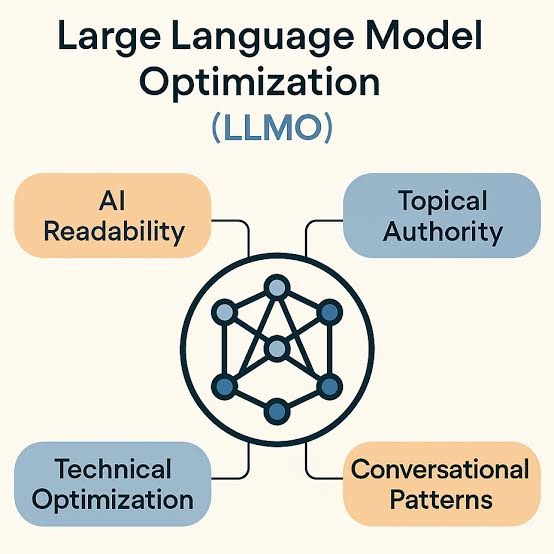
The Shift from Traditional Search to AI-Synthesized Discovery
For decades, the fundamental paradigm of internet search remained relatively unchanged: a user types a query, and a search engine returns a ranked list of links to webpages. Users were responsible for visiting these links, extracting the information they needed, and synthesizing an answer themselves. However, the rise of generative AI and large language models (LLMs) has initiated a profound shift from this traditional model to what we now call AI-synthesized discovery.
Search engines have evolved into answer engines. Instead of merely pointing you to where an answer might live, modern platforms attempt to synthesize the answer directly on the search engine results page (SERP). This is powered by advanced LLMs that process millions of web pages, extract the most relevant and accurate information, and generate a conversational response. This shift fundamentally alters the relationship between content creators and search engines, giving rise to new strategies within the [AI SEO](/ai-seo) ecosystem, most notably Large Language Model Optimization (LLMO).
What is LLMO SEO?
Large Language Model Optimization (LLMO), often referred to interchangeably with [LLM SEO](/ai-seo/llm-seo), is an emerging methodology focused on structuring, organizing, and presenting digital content in a way that maximizes its comprehension, retrieval, and citation by AI-powered search systems and conversational agents.
In simple terms, LLMO is about making your content as easy as possible for an AI to read, understand, and use as a source when generating an answer for a user. While traditional SEO focuses heavily on ranking web pages through keywords and backlinks, LLMO focuses on entity extraction, factual density, semantic clarity, and directly answering user intents in a structured format.
Important Distinction
LLMO is an emerging industry term, NOT an official Google algorithm or feature. It represents a strategic framework adopted by SEO professionals to adapt to generative AI systems. Furthermore, practicing LLMO does not guarantee AI visibility or citations in AI Overviews, as the models determine relevance and authority dynamically.
How LLMO Differs from Traditional SEO
While LLMO builds upon the foundations of traditional SEO, there are distinct differences in optimization priorities, content structure, and performance measurement.
| Factor | Traditional SEO | LLMO SEO |
|---|---|---|
| Primary Audience | Search engine crawlers and human readers. | Large Language Models, AI agents, and human readers. |
| Goal | Rank highly in the 10 blue links on the SERP. | Be cited as a reliable source in AI-generated answers or overviews. |
| Keyword Strategy | Exact match, long-tail variations, search volume. | Semantic relationships, natural language queries, and conversational intent. |
| Content Focus | Length, keyword density, and keeping users on page. | Factual density, direct answers, and concise delivery of complex information. |
| Link Building | Volume and authority of external backlinks to signal trust. | Topical authority, brand mentions, entity relationships, and co-occurrences in trusted datasets. |
| Success Metrics | Organic traffic, CTR, ranking positions. | Citation share, inclusion in AI overviews, brand visibility in synthesized answers. |
Is LLMO a Replacement for SEO?
A common misconception among marketers is that the rise of [AI SEO](/ai-seo) renders traditional search engine optimization obsolete. The definitive answer is no: LLMO is not a replacement for traditional SEO. In fact, you cannot successfully optimize for LLMs without a rock-solid foundation of traditional SEO practices.
AI search engines like Google's Search Generative Experience (SGE) and Bing Chat still rely on traditional web crawlers to discover and index content. If your website suffers from poor [Technical SEO](/seo-services/technical-seo), is un-crawlable, or lacks a coherent internal linking structure, the LLMs will never process your content in the first place.
Why Traditional SEO Remains Foundational:
- Crawlability: AI bots use standard crawling mechanisms. Without correct robots.txt, XML sitemaps, and site architecture, your content remains invisible.
- Helpful Content: Google's core algorithms still evaluate content based on its helpfulness to humans. AI systems are trained to prefer highly rated, helpful content.
- Internal Linking: Internal links establish topical clusters and hierarchy, which LLMs use to understand the context and breadth of your expertise.
- Page Speed and Core Web Vitals: While maybe less critical for the LLM's text extraction, these remain essential for the overall user experience and traditional ranking signals that qualify pages for AI consideration.
Benefits of LLMO SEO
While there are no guarantees of citation in AI-generated responses, aligning your content strategy with LLMO principles offers several distinct advantages for forward-thinking brands.
Key Advantages:
- Better Future-Proofing: By adapting to LLMO now, you prepare your digital assets for the continued proliferation of AI search, rather than scrambling to catch up later.
- Enhanced Content Clarity: Optimizing for LLMs forces you to write clearer, more structured, and highly scannable content, which inherently benefits human readers.
- Demonstrated Topical Authority: LLMO requires comprehensive coverage of topics and entities, naturally building your site's perceived authority in your niche.
- Improved Entity Clarity: By explicitly defining concepts and their relationships, you help search engines disambiguate your brand and offerings from competitors.
- Increased Citation Potential: Content formatted with direct answers, facts, and structured data is significantly more likely to be selected as a source reference by generative AI models.
How LLMO Works: The Process
Understanding how LLMO works requires shifting your mindset from 'how do I rank?' to 'how do I get an AI to trust and synthesize my information?'. The process involves a continuous loop of creation, structuring, and validation.
- 11. Create High-Information Density ContentLLMs value facts, data, and unique insights over fluff. Content creation must focus on delivering concentrated value, minimizing rhetorical padding.
- 22. Structure for Machine ReadabilityUtilize precise HTML semantics. Use proper H1, H2, and H3 tags to create a logical outline. Employ bulleted lists, tables, and bold text to highlight key entities and relationships.
- 33. Establish Context and DisambiguationEnsure the LLM knows exactly what you are talking about by using consistent terminology and linking out to authoritative sources to define complex entities.
- 44. Make Data AccessibleImplement robust Schema markup (JSON-LD). Structured data acts as a direct translation layer, allowing the LLM to understand the properties of your content (e.g., FAQs, Products, Authors) without having to infer them.
- 55. Build Brand AuthorityLLMs weigh the credibility of the source. This involves reinforcing your E-E-A-T (Experience, Expertise, Authoritativeness, Trustworthiness) through author bios, cited credentials, and off-page brand mentions.
- 66. Measure and IterateUse the latest reporting tools to monitor how often your site is cited in AI responses and adjust your content formatting based on performance.
How to Transfer Traditional SEO to LLMO SEO: 12 Practical Steps
Transitioning your strategy doesn't mean abandoning what works; it means layering on new techniques designed for AI comprehension. Here are 12 practical steps to evolve your approach.
- 1Step 1: Shift from Keywords to EntitiesStop obsessing over keyword density. Focus on 'entities'—specific people, places, concepts, or things. Build content that explains how different entities in your industry relate to one another.
- 2Step 2: Prioritize Direct Answers (The Inverted Pyramid)Structure articles so that the direct answer to the user's implicit question is at the very top (or immediately below the heading), followed by supporting details. Don't bury the lead.
- 3Step 3: Enhance Formatting with Tables and ListsLLMs excel at extracting structured data. Convert long, comparative paragraphs into easy-to-read markdown tables or bulleted lists.
- 4Step 4: Deepen E-E-A-T SignalsAI systems prefer authoritative sources. Ensure every piece of content has a verified author with a detailed bio, links to their social profiles, and visible credentials.
- 5Step 5: Implement Comprehensive Schema MarkupGo beyond basic Article schema. Use FAQPage, HowTo, ItemList, and Organization schema to explicitly feed data to the crawlers.
- 6Step 6: Optimize for Conversational QueriesUsers talk to AI differently than they type in search bars. Incorporate natural, long-form conversational questions into your headings and content.
- 7Step 7: Focus on Original Information GainLLMs already know the consensus on a topic. To be cited, you must provide 'Information Gain'—unique data, case studies, or expert opinions not found elsewhere.
- 8Step 8: Clarify Internal Linking ContextUse highly descriptive anchor text for internal links. The link should clearly signal to the LLM the exact entity and context of the destination page.
- 9Step 9: Audit and Consolidate Thin ContentRemove or merge thin, repetitive pages. LLMs favor comprehensive, canonical sources over fragmented, multi-page articles covering the same intent.
- 10Step 10: Leverage First-Hand ExperienceUse 'I' and 'We'. Share personal anecdotes and real-world testing results. LLMs cannot generate true first-hand experience, making it a highly valued human signal.
- 11Step 11: Improve Semantic DensityEnsure you are using the broader vocabulary associated with a topic. If you are writing about [Local SEO](/seo-services/local-seo), you must mention Google Business Profile, citations, NAP consistency, and localized intent.
- 12Step 12: Adopt New Measurement ToolsTransition away from relying solely on rank trackers. Begin utilizing Google Search Console's AI performance reporting and Bing Webmaster Tools to measure conversational engagement.
Example of Transforming a Traditional SEO Page
To illustrate the shift, let's look at how a page targeting 'What is Local SEO?' might evolve.
| Element | Traditional SEO Approach | LLMO SEO Approach |
|---|---|---|
| Heading Structure | H1: Local SEO Guide, H2: Why You Need It, H3: Tips | H1: What is Local SEO?, H2: Definition & Core Concepts, H2: How to Rank in the Local Pack |
| Introduction | Lengthy preamble about the history of the internet and how vital marketing is for small businesses today. | Direct, 40-word definition of Local SEO immediately below the H1, followed by key ranking factors. |
| Formatting | Large blocks of text with bolded keywords (e.g., **local SEO services**). | Bulleted lists for ranking factors, a table comparing Local vs. Organic SEO, and clearly defined entities. |
| Author Signals | Admin or generic company name as the author. | Named author with a bio detailing 10 years of specific local search marketing experience. |
| Data Presentation | Paragraph explaining that 46% of searches have local intent. | A dedicated 'Local SEO Statistics' section using `<ul>` tags, explicitly citing original research sources. |
LLMO Content Strategy: Structuring for AI
A successful LLMO strategy requires a diverse mix of content formats designed to satisfy different types of AI prompts. If you are investing in [Blogging & Copywriting](/content-marketing/blogging-copywriting), your editorial calendar should include:
Essential Content Types:
- Pillar Pages: Comprehensive, high-level overviews of broad entities that establish your site as a foundational resource.
- Supporting Guides: Deep dives into specific sub-topics linked from the pillar page, demonstrating exhaustive topical coverage.
- Question-Based Content (FAQs): Direct, concise answers to specific who, what, where, when, and why questions favored by voice assistants and AI chat.
- Comparison Pages (X vs Y): Objective, feature-by-feature comparisons using data tables, helping AI models synthesize decision-making criteria.
- Process & How-To Guides: Step-by-step instructions (using numbered lists or HowTo schema) that an AI can easily extract and format as an ordered list.
- Expertise & Opinion Pieces: Unique viewpoints and analyses that provide information gain, distinguishing your brand from generic AI-generated summaries.
- Local/Geo-Specific Content: Vital for [Global SEO](/seo-services/global-seo) and local searches, detailing specific geographic nuances and entities.
Content Characteristics that Help AI
To increase the likelihood of your content being utilized by Large Language Models, ensure it possesses these specific structural and semantic characteristics:
AI-Friendly Traits:
- Clear, Hierarchical Headings: A logical flow from H1 to H2 to H3 without skipping levels.
- Direct Answers: Providing the exact answer to a query immediately, before adding nuance.
- Unambiguous Context: Avoiding overly clever or vague language that might confuse machine parsing.
- Entity Density: Frequent, natural use of specific nouns, brands, locations, and concepts.
- Structured Formatting: Heavy reliance on tables, bullet points, and numbered lists to organize complex data.
- Absence of Fluff: High information-to-word-count ratio.
15 Common LLMO SEO Mistakes
As marketers rush to adapt to AI search, many are implementing misguided tactics. Avoid these critical errors when optimizing for LLMs:
Mistakes to Avoid:
- 1. Writing exclusively for the AI, completely alienating human readers.
- 2. Burying the direct answer under paragraphs of introductory fluff.
- 3. Using inconsistent terminology for the same entity across your site.
- 4. Neglecting traditional technical SEO (site speed, mobile responsiveness).
- 5. Failing to implement or correctly validate JSON-LD structured data.
- 6. Over-optimizing with traditional keyword stuffing instead of semantic relevance.
- 7. Publishing purely AI-generated content without human editing, lacking E-E-A-T.
- 8. Ignoring internal linking, leaving pages as orphaned data islands.
- 9. Providing factually incorrect or unverified data (AI models penalize low-trust data).
- 10. Using unstructured, narrative text for comparative data instead of tables.
- 11. Omitting author biographies and credibility signals.
- 12. Trying to 'hack' AI Overviews with invisible text or manipulative prompts.
- 13. Focusing only on top-of-funnel queries and ignoring deep, specific technical questions.
- 14. Forgetting to update outdated content, leading AI to trust fresher competitors.
- 15. Measuring success solely by traditional '10 blue links' rankings, ignoring citation metrics.
LLMO vs AEO vs GEO SEO vs AI SEO
The terminology surrounding AI search optimization can be confusing. Here is a breakdown of how LLMO fits into the broader ecosystem alongside [AEO](/ai-seo/aeo) (Answer Engine Optimization), [GEO SEO](/ai-seo/geo-seo) (Generative Engine Optimization), and AI SEO.
| Term | Focus Area | Primary Goal |
|---|---|---|
| AI SEO | The overarching umbrella term. | Using AI tools to improve SEO, and optimizing websites for AI search engines. |
| LLMO (Large Language Model Optimization) | Data structuring, entity relationships, and semantic clarity. | Optimizing content to be deeply understood and retrieved by underlying LLMs. |
| AEO (Answer Engine Optimization) | Direct answers, FAQs, voice search, and featured snippets. | Structuring content to be the definitive short answer for conversational queries. |
| GEO (Generative Engine Optimization) | Visibility within AI Overviews and generative UI. | Adapting content formats and citation structures specifically for generative search results. |
Latest SEO Trends in 2026
The landscape of search optimization has matured significantly since the initial generative AI boom. Understanding the verified trends of 2026 is critical for a successful strategy.
2026 Developments:
- Mainstream SGE Reporting: In August 2026, Google Search Console officially rolled out Search Generative AI performance reporting worldwide, giving webmasters concrete data on AI visibility and click-through rates.
- Emphasis on Anti-Spam: Following Google's May 15, 2026 guidance, the algorithm heavily penalizes sites attempting to 'hack' AI Overviews using manipulative GEO/AEO tricks, reinforcing that genuine E-E-A-T and helpful content remain the only sustainable paths.
- Bing's Analytics Expansion: Bing Webmaster Tools expanded its AI Performance reporting in 2026, introducing advanced metrics that show citation share, topical authority scores, and deep conversational intent analysis.
- Multimodal AI Search: Search engines are increasingly synthesizing text, images, and video simultaneously. Optimizing visual assets with descriptive alt-text and transcripts is now a core LLMO component.
- Rise of AI Agents: Beyond chatbots, autonomous AI agents are executing tasks (e.g., booking flights, researching software) on behalf of users. Optimizing APIs and structured data for agent accessibility is the next frontier.
Does LLMO Guarantee AI Visibility?
A crucial reality check for any business investing in modern SEO:
No Guarantees
Practicing LLMO does not guarantee visibility or citations in AI Overviews or chatbot responses. LLMs generate responses dynamically based on complex probability calculations, user context, personalization, and real-time data retrieval. LLMO merely provides your content with the best possible structure and semantic clarity to be considered as a viable source. Think of it as earning a ticket to the lottery, rather than guaranteeing a win.
How Businesses Should Approach LLMO in 2026
Transitioning to an AI-first search landscape requires a methodical approach. We recommend businesses follow this 7-phase roadmap.
- 1Phase 1: Foundation AuditEnsure your traditional technical SEO is flawless. Fast load times, error-free crawling, and mobile optimization are prerequisites.
- 2Phase 2: Entity MappingIdentify the core entities (concepts, products, experts) associated with your brand and map how they connect.
- 3Phase 3: Content RestructuringAudit existing high-traffic pages and reformat them with direct answers, tables, and clear hierarchical headings.
- 4Phase 4: Structured Data OverhaulImplement comprehensive, error-free JSON-LD schema across the entire domain.
- 5Phase 5: E-E-A-T EnhancementBuild out robust author profiles, secure high-quality brand mentions, and publish original research to prove expertise.
- 6Phase 6: Conversational Content ExpansionDevelop FAQ sections and long-tail query pages that mirror how users speak to voice assistants and AI chats.
- 7Phase 7: Measurement IntegrationIntegrate the new 2026 GSC and Bing AI reporting tools into your monthly analytics dashboards to track citation share.
The Ultimate LLMO SEO Checklist
Use this checklist to ensure your content is fully optimized for Large Language Models.
Checklist:
- Technical: XML sitemap updated and submitted.
- Technical: Page speed optimized and Core Web Vitals passing.
- Content: Direct answer provided within the first 100 words.
- Content: Strict adherence to H1, H2, H3 hierarchy.
- Content: No 'fluff' or unnecessary narrative padding.
- Formatting: Data comparisons utilizing HTML/Markdown tables.
- Formatting: Steps and processes utilizing ordered lists.
- Entity: Consistent terminology used for core industry concepts.
- Entity: External links provided to authoritative definitions where necessary.
- Internal: Descriptive, entity-rich anchor text used for all internal links.
- Structured: Relevant JSON-LD schema implemented (Article, FAQ, Person, etc.).
- Authority: Verified author bio with credentials present.
- Authority: First-hand experience or unique information gain demonstrated.
- Measurement: Registered in Google Search Console and Bing Webmaster Tools for AI tracking.
Future-Proof Your Strategy with AVR Web Consulting
Navigating the transition from traditional search to AI-synthesized discovery can be daunting. At AVR Web Consulting, we specialize in modern [SEO Services](/seo-services), helping brands adapt to the complexities of Large Language Model Optimization while maintaining their foundational search visibility. Whether you need an audit of your technical architecture or a complete revamp of your content strategy, our experts are here to guide you into the future of search.
Sources & Further Reading
To stay updated on the rapidly evolving world of AI search, we recommend following these official resources:
Official Resources:
- Google Search Central: Guidelines on AI-generated content and Search Generative Experience updates (Including the May 15, 2026 guidance on E-E-A-T).
- Bing Webmaster Guidelines: Updates on Bing Chat integration and AI performance metrics.
- AVR Web Consulting Blog: Continuous updates on AI SEO, LLMO, and digital marketing trends.
Frequently asked questions
Get an AI visibility & SEO audit
Tell us your target keywords and markets. We reply within one business day with findings, priorities and a tailored proposal.